Three Chords and a Nervous System.
The Story Behind “Darling, We Were Meant to Be Free”
I’m sitting on the banks of the Bainskloof River, just one hour outside of Cape Town. One day prior, my partner (who is a photographer) had been commissioned to document an academic conference on AI and ethics taking place just outside the city. Afterwards, we decided to break away from the workweek midweek and spend a night in the mountains refilling our creative tanks.
It was beautiful.
The Bainskloof Pass winds up and up the mountain until you are so far removed from society that all that remains is a bathtub overlooking a ravine. We are our own bosses! We are artists! We can do this! We can choose. No one gets to tell us what to do.
One day later, we are both sitting beside the river — no one in sight but us — completely wrecked with anxiety and guilt over having taken a day “off work.” Where do these feelings come from? The emotions filling us are dark and powerful enough that we struggle to enjoy our time there at all. So much guilt for choosing pleasure. So much guilt for choosing rest.
Then suddenly: a break in the cloud.
The thoughts in my mind go still. I hear a bird singing. I hear the sound of water moving through the ravine. I take all my clothes off and lay them against a rock. Sunshine streams through the opening in the clouds. I dive into the water and hear these lyrics arrive in my mind:
“Birds don’t have anxiety.
Rivers don’t write reports.
Rocks don’t measure time.
The sun shines its light.
Hey look — it’s not a crime.”
I come back up for air and see my partner sitting in the sunlight meditating on all that surrounds him. My heart fills with love and then the chorus arrives:
“Darling, can’t you see?
Darling, can’t you feel?
We were meant to be free.
We were meant to be free.”
For a long time now, I’ve felt somehow trapped in the 90s. I feel resonance with the songs written during that era. Deep questions. Simple melodies. Basic chords. Philosophical evolution at scale.
Mazzy Star’s Fade into You.
Joan Osborne’s One of Us.
Edie Brickell & New Bohemians’ What I Am.
I struggle to connect in quite the same way with much of contemporary popular music. The BPM has accelerated to well over 120++. I also live in the city of Jazz — a genre I deeply love — however, I do think we are sometimes at risk of looping ourselves into increasingly technical complexity and forgetting the whole point of everything.
Folk music has a place. Simplicity has a place. Primary chords deserve celebration.
For this reason, upon returning home from the trip, I had absolutely no qualms about immediately releasing a three-chord song.
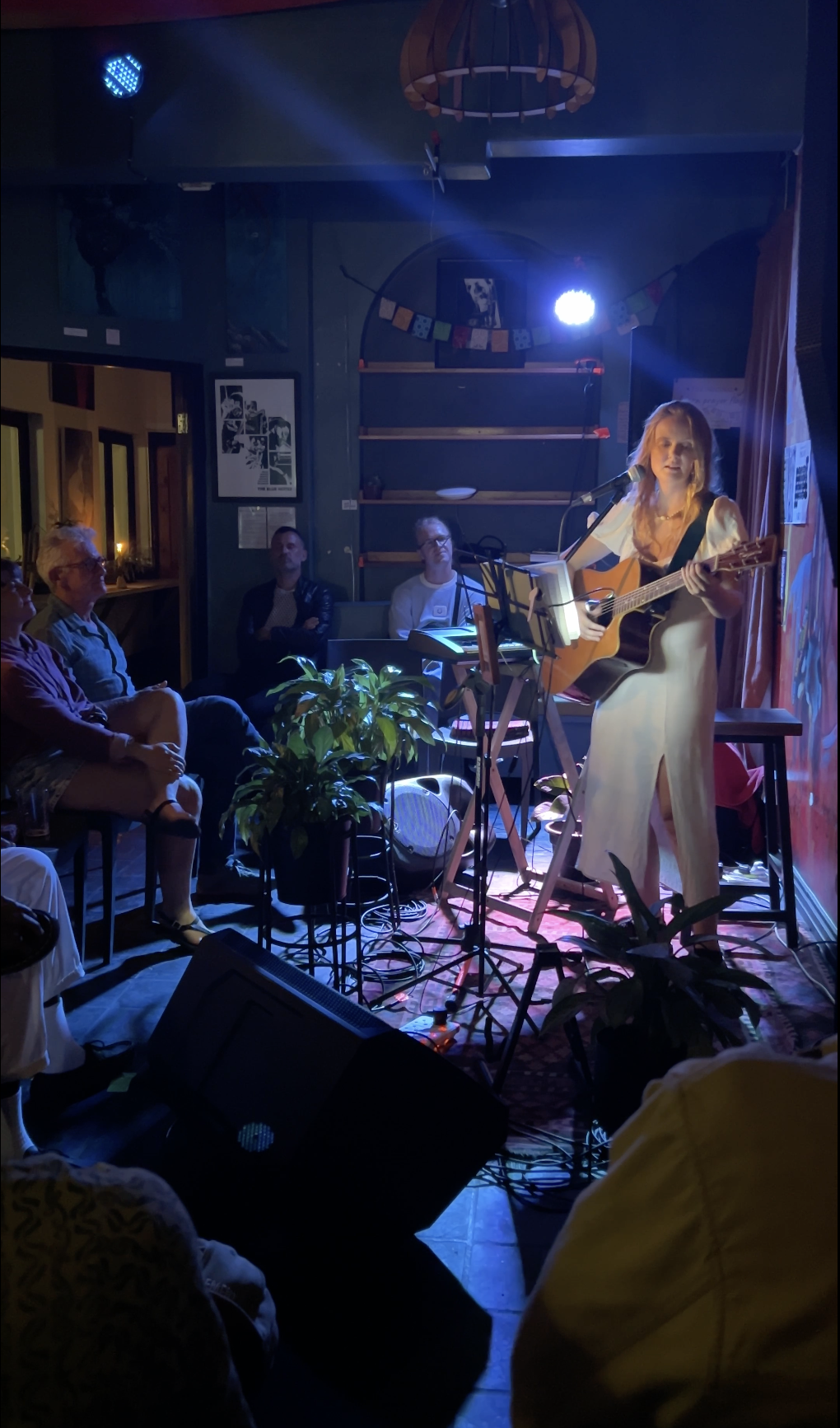
December arrived. Life was quiet. Business was poor. There was a holiday slump at my creative writing school and I was not yet primed for a Summer music performance season. Then January arrived and I battled internally over whether I should organise another Hatua Kali show.
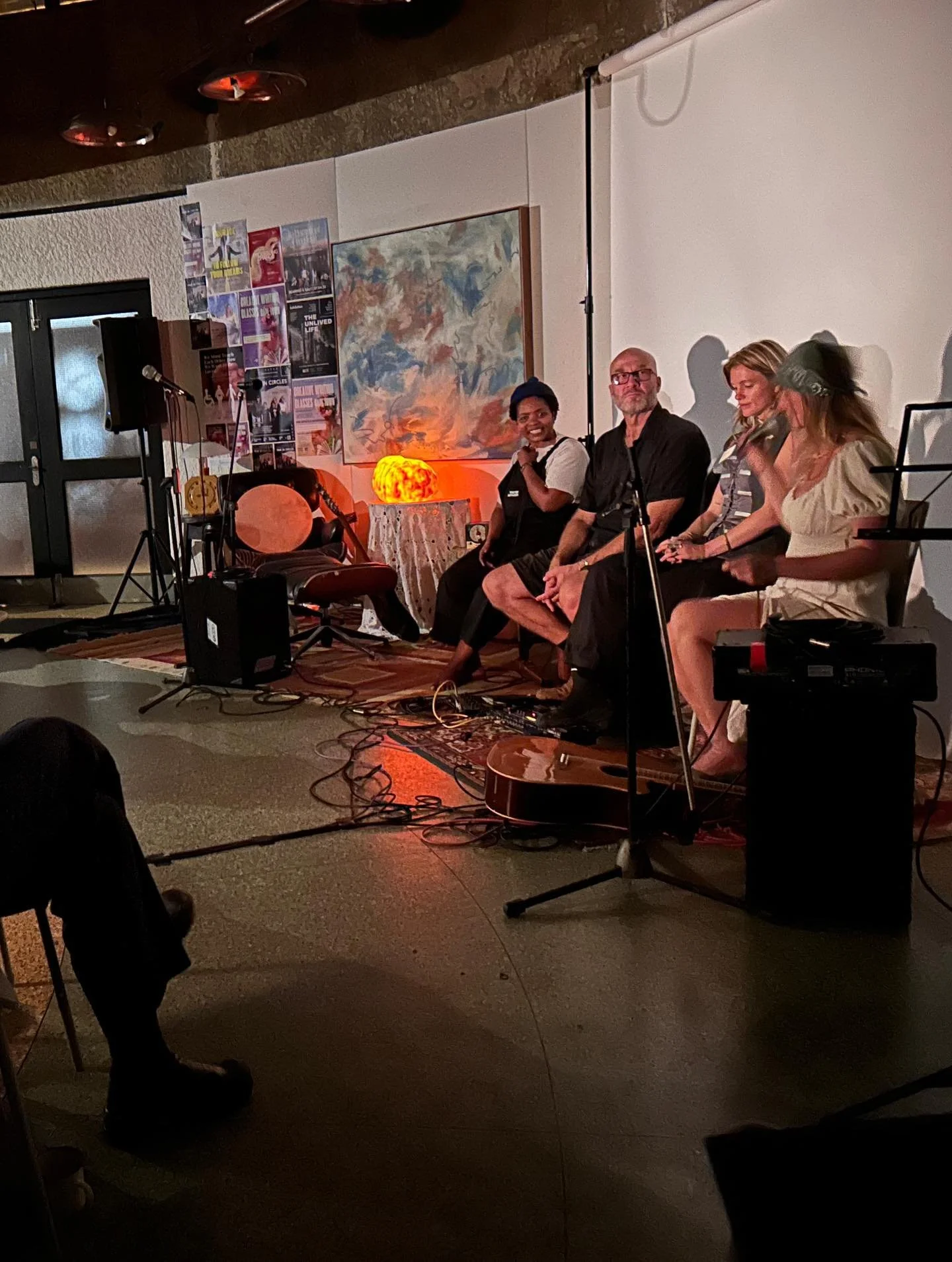
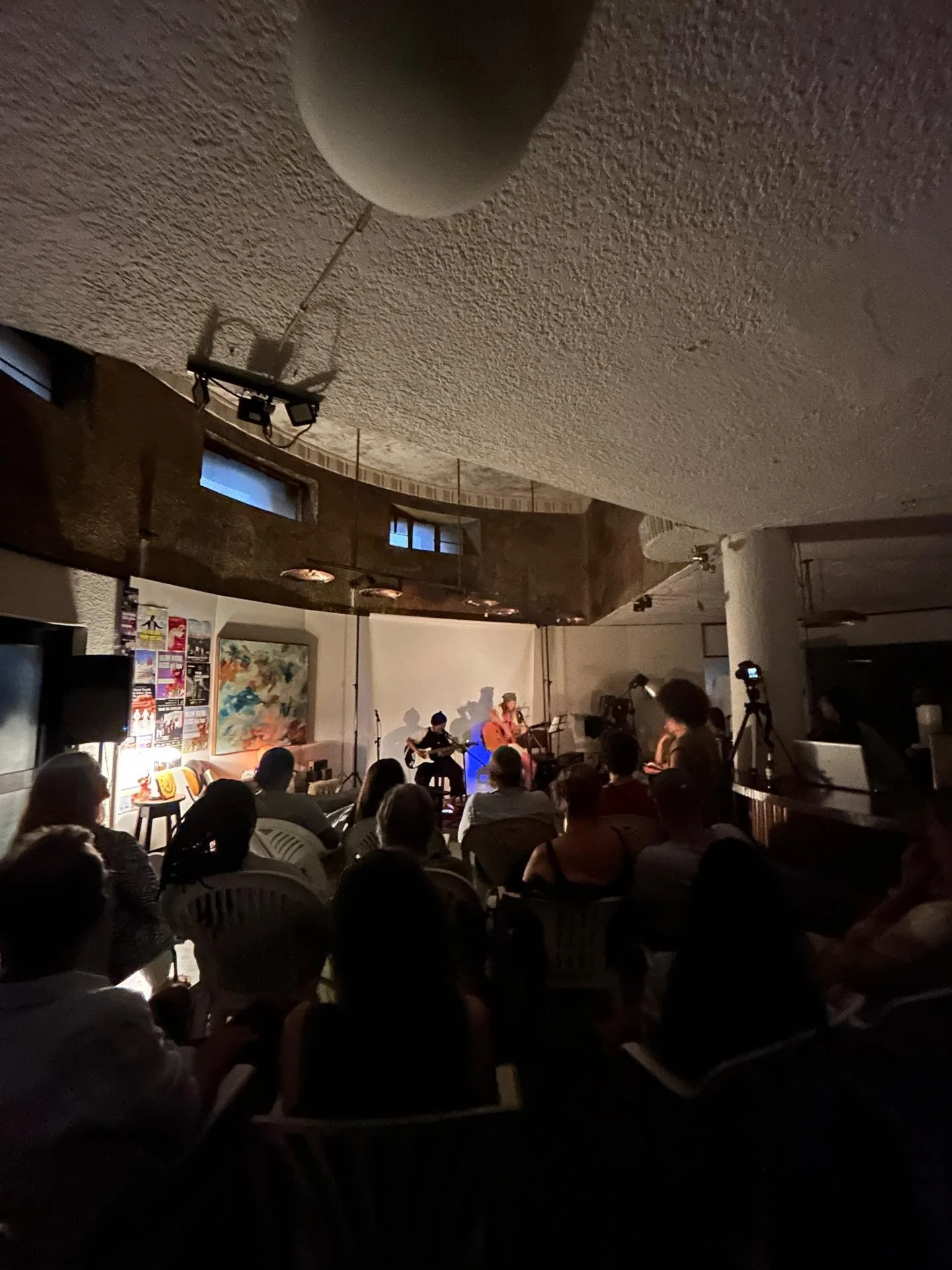
Eventually, we decided to go ahead. We called it, “Time in Circles.” It sells out. 55 people.
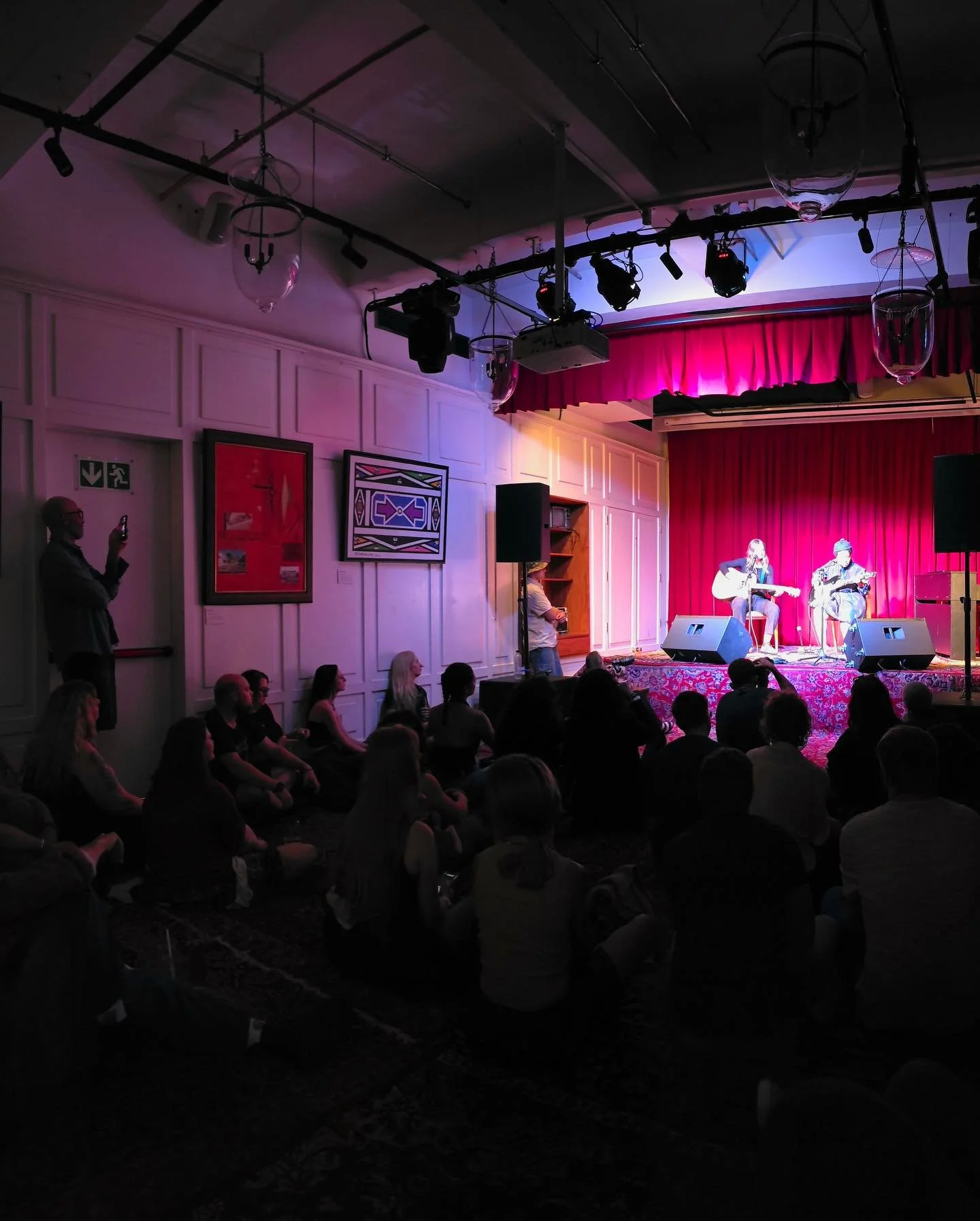
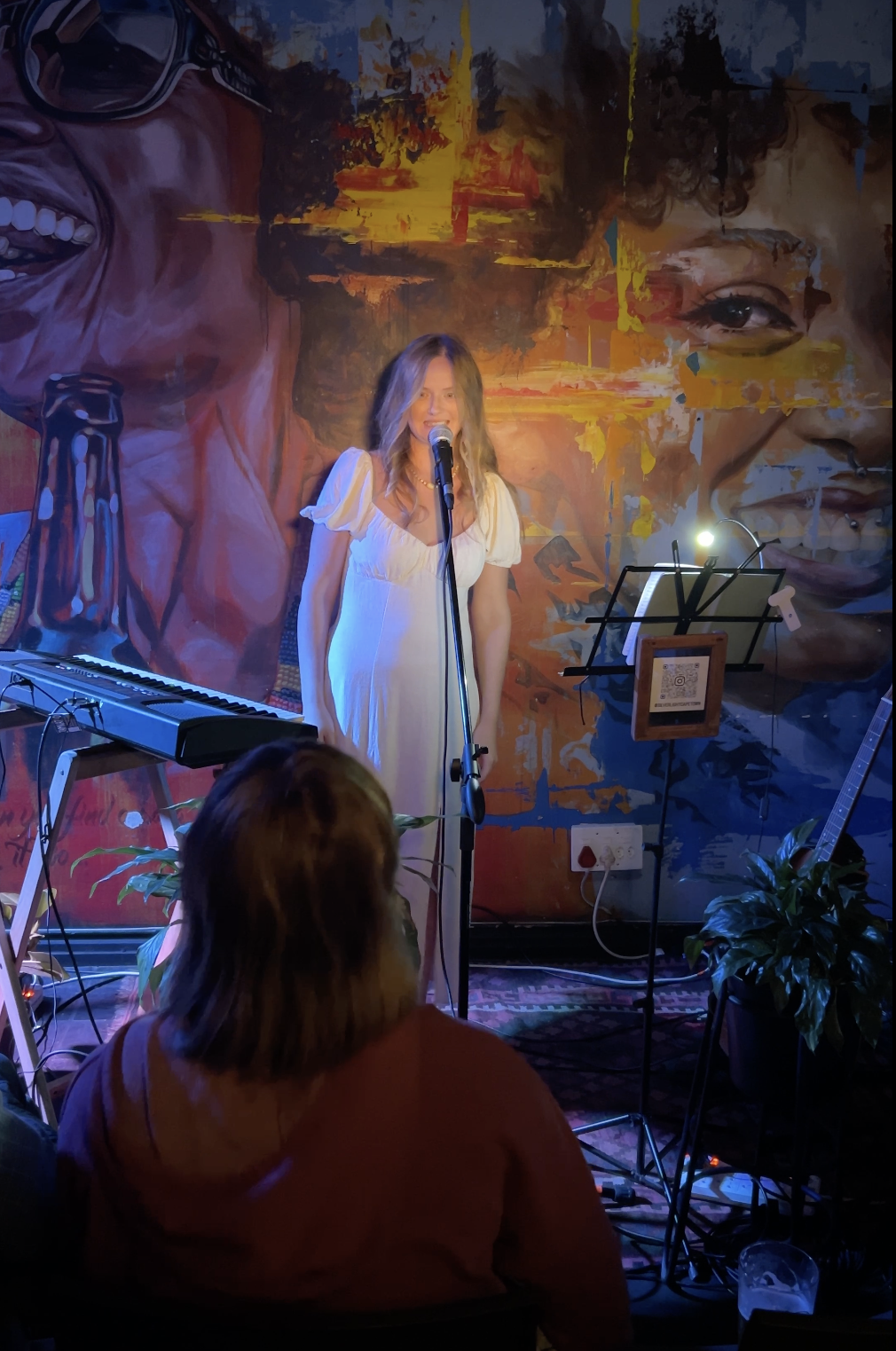
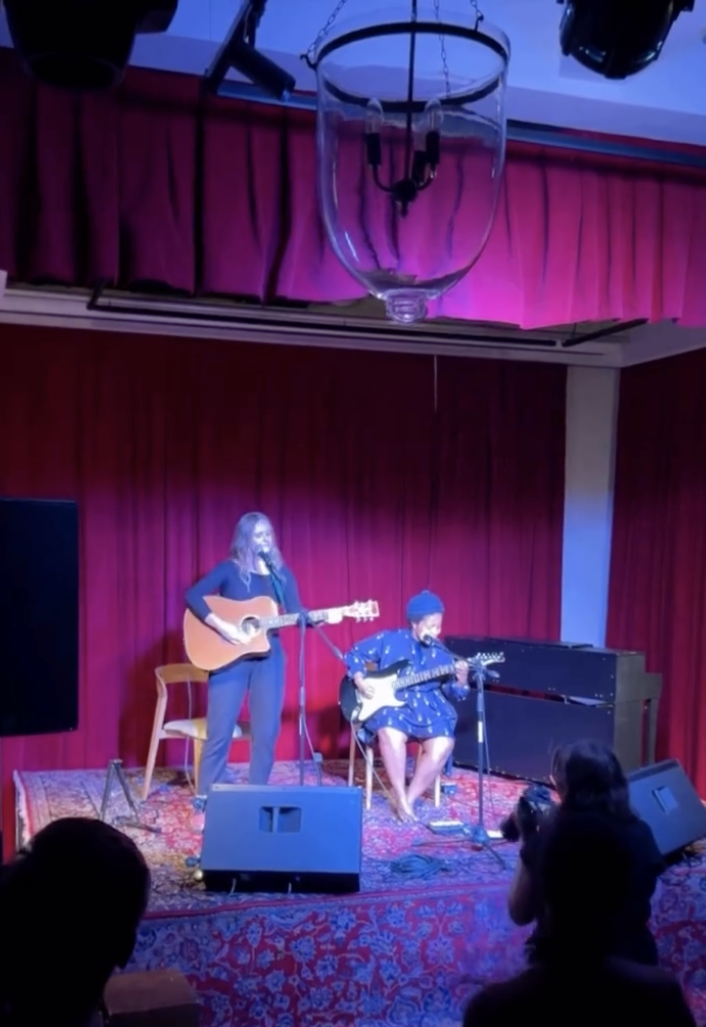
Next thing, I’m booked to open for Casey Lowery at Gorgeous George. It sells out. 120 people. Next thing, that show has passed and I’m in a car being driven to the Cape Town International Convention Centre to perform in front of four hundred people after a last-minute cancellation by the musician originally booked.
Given that I’d only sung in public for the first time in October the previous year to a room of twenty, this all feels wild.
The song that takes off quicker than all the others? “Darling!”
A reminder that life can change for the better in an instant. And that real-life narrative arcs are often incoherent…
Because suddenly - Four hundred people are singing back lyrics I originally wrote as medicine for anxiety.
“Darling, can’t you see?
Darling, can’t you feel?
We were meant to be free.
We were meant to be free.”
Just twenty minutes earlier, I’d been in my pajamas reading Gabriel Garcia Marquez’s “One Hundred Years of Solitude” intent on a night in. This trajectory changed with a single phone call.
“Is this a scam?”
“Nik Rabinowitz is riffing off the lyics and everybody is laughing (in a good way). Fear transmuted into joy!”
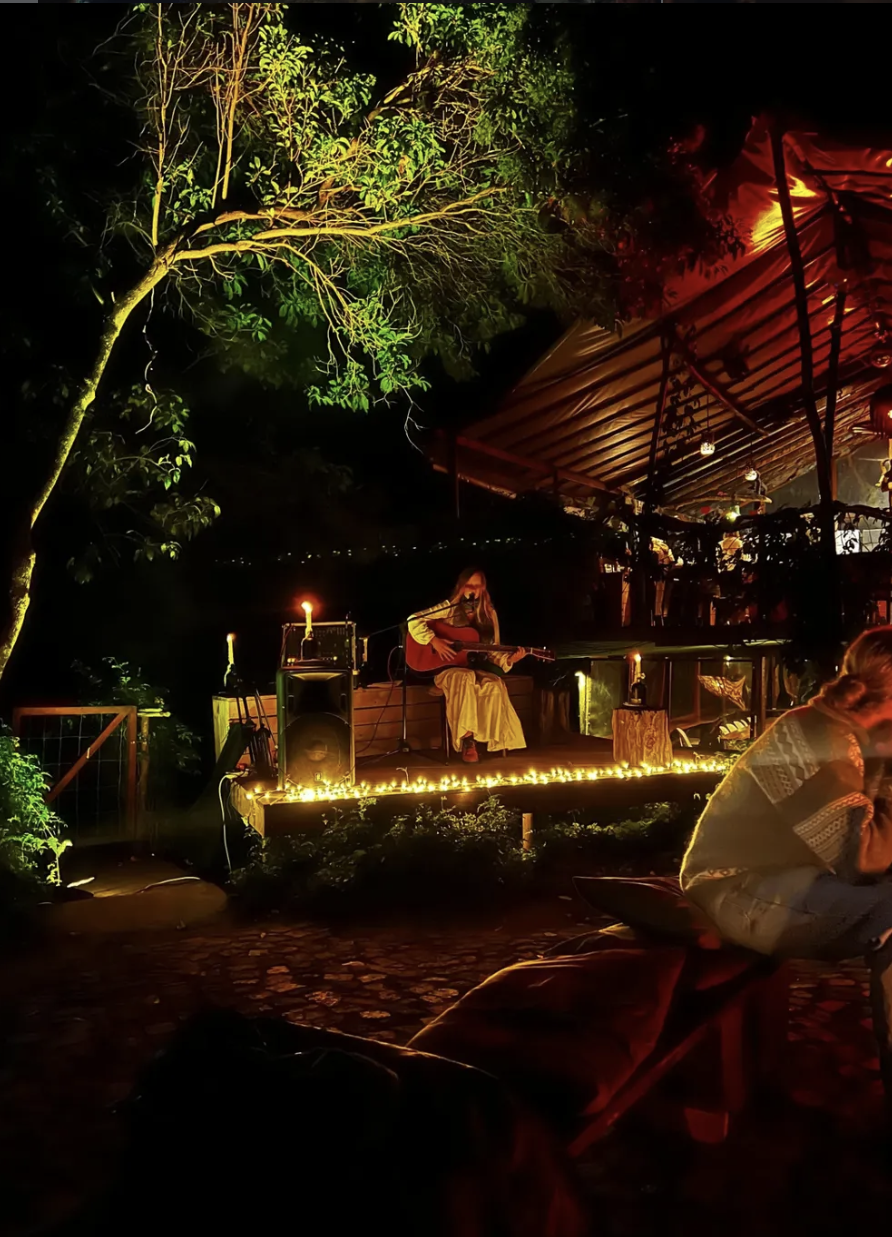
The Year of the Horse has arrived at full-speed gallop. I ride the waves of momentum and debut my solo show, The Butterfly Effect, at The Commons in March. In April, I head out on tour down the Garden Route, playing beneath fairytale soft-lit forest canopies and then a stone’s throw from the ocean at Surf Cafe.
Then it happens again. The dark thing. The thing I’m trying my best to avoid. I return to Cape Town and suddenly I am wilting again.
This time, it feels even worse than before.
It’s almost as though the more evidence I receive of my own potential, the more depressed I become. Old shadows return, bringing fears of running out of money. Nobody booking writing courses. Nobody buying tickets. Dark thoughts creeping in. Old habits seeping back through the cracks.
These thoughts couldn’t be further from reality. I’m doing better than I ever have before. And yet my body experiences the thoughts as more real than reality itself.
The verses in “Darling, We Were Meant to Be Free” tell the story of someone who could not follow a traditional pathway into education and employment because they couldn’t afford the school fees and because their nervous system was too sensitive for fast-paced work systems.
The anthemic chorus serves as healing medicine for the person who has been rejected by societal systems and isolated as a result.
What the verses do not necessarily reveal are the behind-the-scenes circumstances and root causes that lead to such an outcome.
When I first sang these lyrics publicly, I felt overwhelmed simply telling the truth about the experience because I was simultaneously re-experiencing the emotional reality beneath the story itself.
Thankfully, over time, the feelings dissolved and the story lost some of its charge, allowing the words to become almost as easy to say aloud as:
“Hi, how are you?”
“No, how are you really?”
There are sadnesses inside me I cannot fully explain to anyone because they no longer match the reality I currently inhabit — and yet they continue to haunt me as vividly as they did thirty years ago. The more pressure I feel not to feel them, the more consumed by them I become.
But there is something music does for me that almost no other intervention has been able to do.
When I play guitar — however badly — there are energies siphoning themselves out of my spirit and reorganising elsewhere. Most of these energies sit deep within my foundations. They are things that happened before I had the capacity for logic or rationale. Abandonment. Neglect. Violence. Fear. Loss. Overwhelm. Things that happened before I was consciously aware of what was happening to me.
And so I struggle with the logic that sadness should necessarily be “cured.” Because it is precisely this shadow, depth, and despair that has created within me the most beautiful light, calmness, and healing energy that I now transpose and transmute through music and storytelling.
Something which, I think it’s fair to say, is sorely needed in the world right now.
So let me be in my sadness and let me be content with my three chords.
Not all stories need to circle back to the beginning. Not all tensions require resolution.
Some stories simply need quiet being. Gentle presence. A celebration of small things. A reconstruction of foundation.
That is what The Butterfly Effect is about.
With Darling, We Were Meant to Be Free as its flagship song.
Slowly, you’ll come to understand why.
The original demo track is now available on SoundCloud, Spotify, and YouTube.